
What to Expect Before, During, and After Swim Lessons
Whether your family is new to swim lessons or returning after a break, here’s everything you need to know about what to expect at a first swimming lesson at Big Blue Swim School. We’ve got you covered, from preparation tips to what happens during and after the lesson.
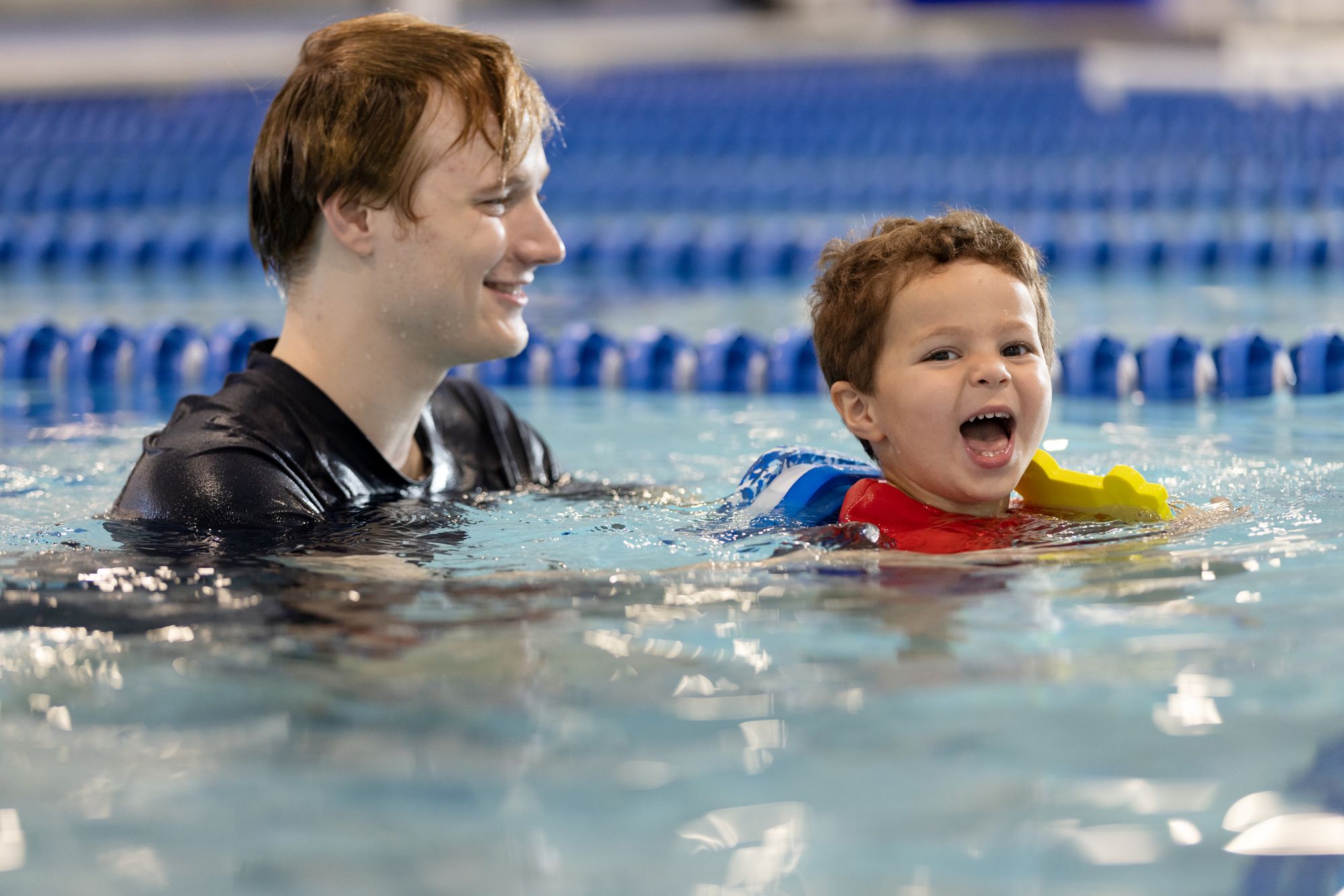
Preparing for a Swim Lesson: What to Bring and Do
Whether you’re bringing a baby, toddler, or an older child for lessons, these tips can help you feel prepared.
Pack the Essentials
Ensure a fun and smooth experience by packing a towel and goggles for toddlers and older kids. Children with hair longer than ear length might want to wear a swim cap, but that is optional.
Swim diapers are also necessary for all swimmers who aren’t potty trained. Bring a snug-fitting reusable swim diaper to wear over a disposable one to meet our diaper policy.
Check out our Swim Lesson Essentials guide for more packing tips.
Arrive Early
Arriving 10 minutes before the scheduled lesson gives you time to check in, get settled, and ensure your child feels calm and ready. While it’s helpful to have your swimmer already dressed in their swimsuit, our facilities also have changing rooms if needed.
Health and Wellness First
Please stay home if your child isn’t feeling well. Our flexible makeup lesson policy allows you to reschedule lessons easily due to illness.
During Swim Lessons
Each phase of childhood comes with its own unique needs. Depending on the age of the children you’re bringing, here’s what you can expect during swimming lessons.
Baby Swim Lessons: What to Expect
For our youngest swimmers in the Baby Blue program, a parent or caregiver joins their child in the water throughout the class. You’ll help your baby feel more comfortable in the water with guidance from our expert instructors.
Don’t forget your own swimsuit for these sessions! Goggles are not necessary for babies.
Toddler Swimming Lessons: What to Expect
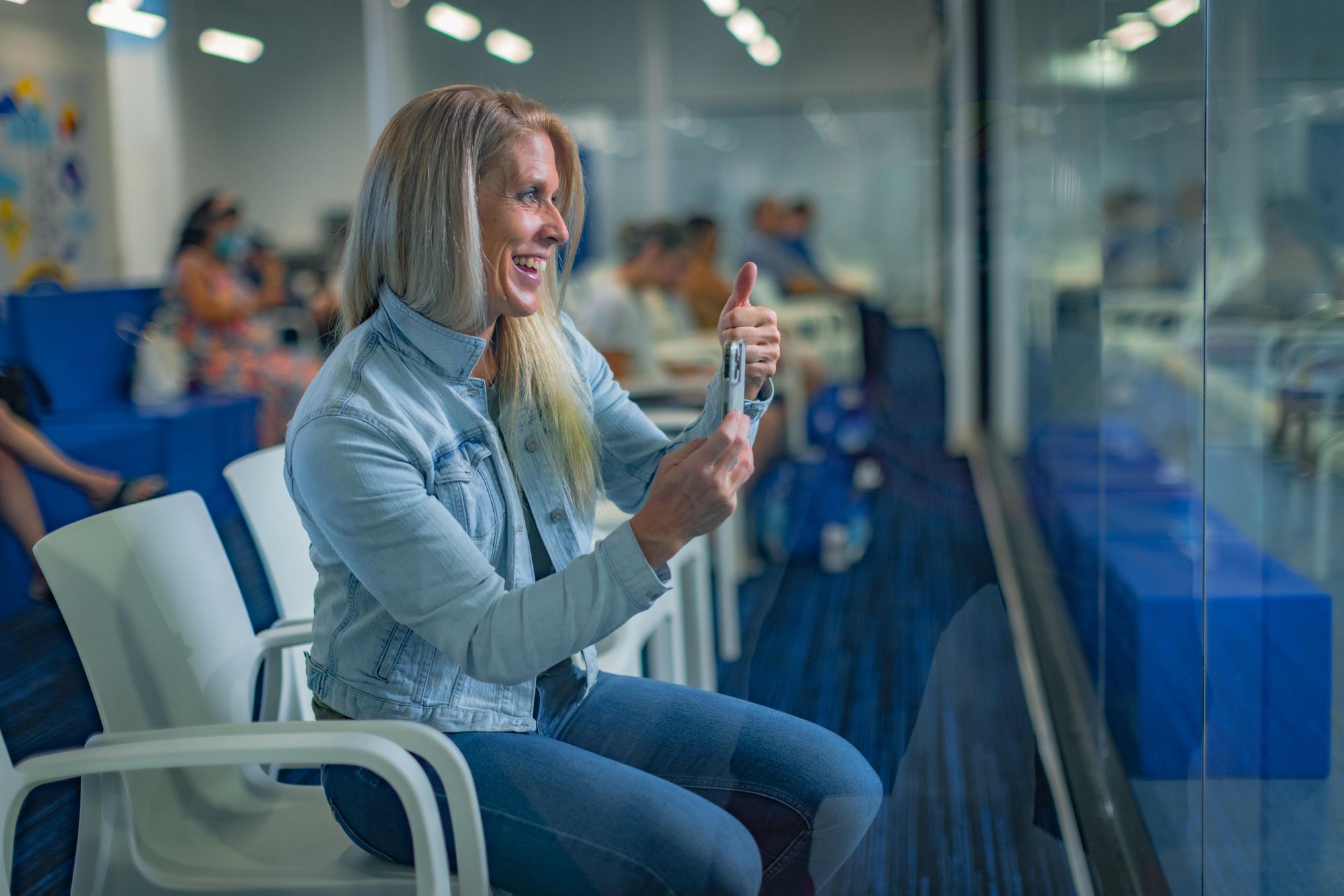
In toddler swim lessons, your child will begin learning foundational skills like floating, kicking, and basic arm movements. Depending on their age and skill level, your child may transition from swimming with a parent in the water to swimming independently with the instructor’s guidance. Parents can watch these lessons from our comfortable viewing lobby with Wi-Fi access.
Child Swimming Lessons: What to Expect for Older Kids
For swimmers in our Bright Blue, Bold Blue, and Big Blue levels, instructors focus on teaching water safety, stroke techniques, and building confidence in the water. Parents can relax in our carpeted viewing area. Check with your local Big Blue Swim School location to see if on-deck viewing is available.
After the Swim Lesson
After completing a lesson, here’s what to expect.
Post-Lesson Routine
After lessons, swimmers can rinse off in the showers conveniently located on the pool deck. Private changing spaces are also available in our locker rooms.
A Commitment to Cleanliness
The health and safety of our swimmers, families, and staff are always our top priority. At the end of each day, we implement our cleaning protocol. At Big Blue, we keep our water ultra-clean with a state-of-the-art pool filtration system, plus a UV light sanitizer to go above and beyond standard pool operation protocol.
If you have any additional questions about the experience, feel free to call or text your local pool—we’re here to help!
Join Big Blue Swim School
Are you ready to get started? Book your first swim lesson today and see why families trust Big Blue Swim School to help their kids thrive in the water.
At Big Blue Swim School, we’re committed to helping your child develop essential swimming skills while making lasting memories. Contact us to learn more about our programs and facilities.
FAQ
What Should I Do If My Child Is Nervous About Their First Swim Lesson?
Calm nerves by talking to your child in a positive and encouraging way about what to expect during a first swim lesson. You could visit the pool beforehand to familiarize them with the environment. Bring their favorite swim gear (such as goggles or a fun swimsuit) to help them feel comfortable.
At What Age Can My Child Start Swimming Lessons?
At Big Blue Swim School, we can start teaching babies to swim when they reach 3 months. Our programs are ideal for up to age 12, regardless of previous experience. Kids of any age can benefit from learning to swim, so it’s never too late to start!
How Do I Know What Swim Level My Child Should Be In?
Swim levels are typically based on age, experience, and skill level. Big Blue Swim School levels start based on age, while the Bold Blue and Big Blue levels depend on swimming skills and experience. Learn more about each level.
Three Benefits of Small Group Lessons
Everything we do is by design at Big Blue. We want to provide families the best learning environment, learning experience, and value.
We believe small group lessons are the best way for kids to learn to swim. They are more affordable than private lessons, but the benefits don’t stop there. Kids get individualized attention, a chance to learn by demonstration and develop muscle memory without fatigue setting in.
Small group learning is prevalent in classrooms because science backs up the power of small groups to promote well-being and help children stay engaged and learn faster! Even top graduate programs use small groups to great success. We’ve taken the best of small group learning and layered it into our Big Blue curriculum, keeping our classes within the recommended number of participants based on age.
Kids Like Being With Other Kids
Swimming is truly a social activity, from celebrating each other’s victories to jokes with your instructor at Big Blue to family beach vacations and pool birthday parties down the line.
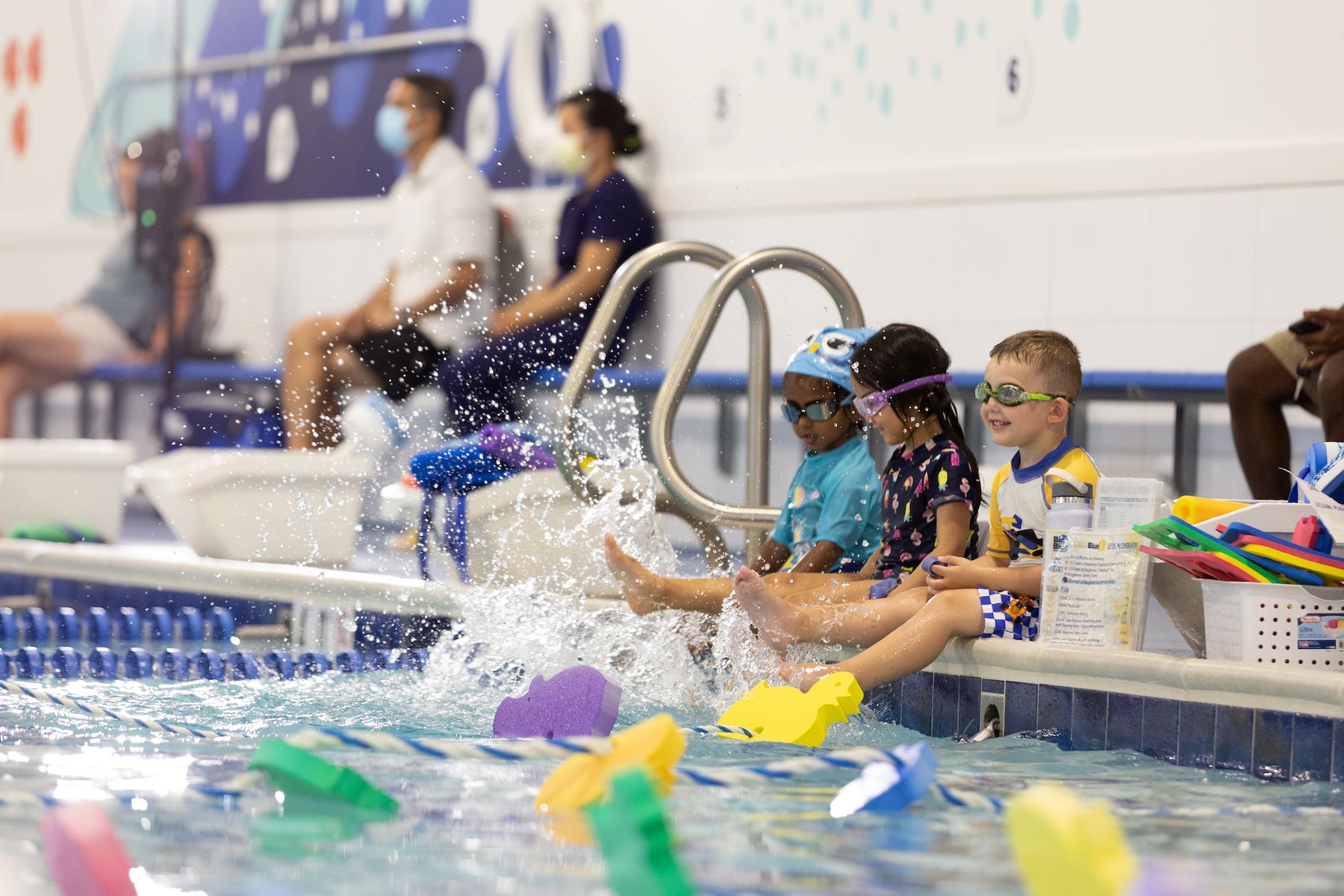
Small group lessons ensure a social aspect to learning to swim without the overwhelm a larger group can bring. Being around other swimmers in their age range gives young people peer interaction and a chance to have fun. They also get reassurance if they’re hesitant about trying a new skill. Seeing someone their age submerge their face, blow bubbles or test out a new stroke can reinforce their desire to learn. With a few friends in the pool, a shier or more nervous child can feel more comfortable since they aren’t the sole focus of attention for the instructor.
Kids Get Three Essential Kinds of Feedback
Learners benefit from all kinds of feedback and learning modalities. While swim lessons don’t include reading to learn and written feedback, there are opportunities for three other essential types of feedback: auditory, visual and kinesthetic.
In a private lesson, young swimmers get auditory and kinesthetic feedback – an instructor can tell a child what they need to do and help them with the form and motions. Visual feedback, gained by watching someone perform a task or skill, is more challenging since the instructor can’t show the skill and explain it simultaneously as easily.
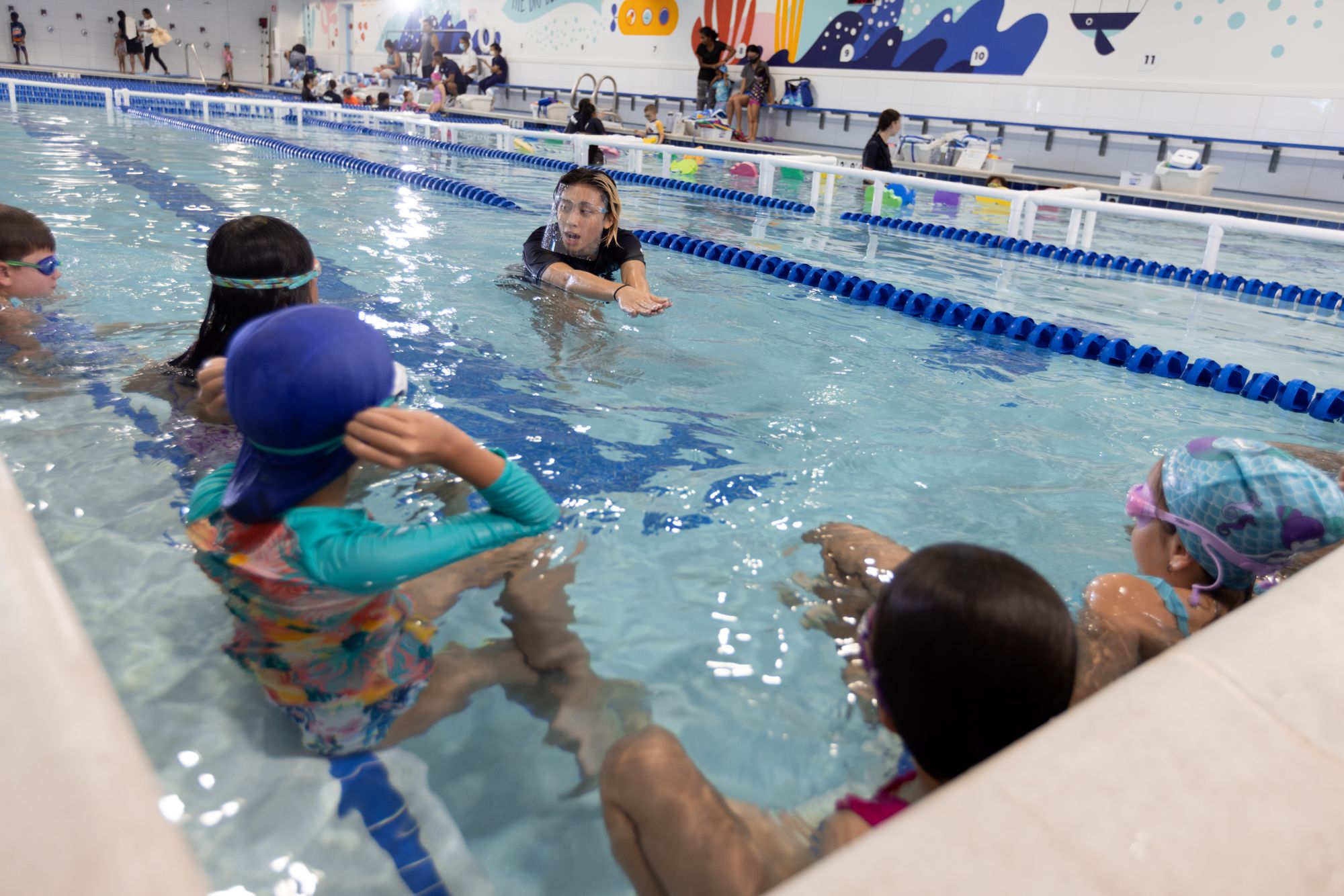
Large group lessons can provide visual feedback, where a child can see another child demonstrate a skill. When a swim lesson group is too big, a child may not be able to hear verbal feedback. They may not have as much opportunity to have the instructor work one-on-one with them.
Only small group sessions, like the classes we run at Big Blue Swim School, allow for all three kinds of feedback in every lesson. Each swimmer gets the chance to hear from an instructor, have an instructor work with them on specific movements and techniques and learn by watching peer swimmers.
Enough – But Not Too Many – Turns
Our small group ratio is set up for child development and is based on the science of the body. We know the optimal number of turns to build muscle memory but not fatigue a child so much that their form breaks down. Learners get the practice they need in our small group lessons but also have time to recover – and watch their peers!
Our small group swimmer/instructor ratios for our most common levels are 3-to-1 in Bright Blue and 4-to-1 in Bold Blue, with slightly larger class sizes for our Baby Blue and most advanced Big Blue levels. The work older and more experienced swimmers do takes more effort and endurance and a longer recovery is beneficial. We always want enough time to practice without losing form due to fatigue.