
Pool & Hot Tub Safety
Taking the time to ensure your children are aware of what they should do to stay safe near water is an important conversation for every family! Even if you don’t have a pool or hot tub, your child may swim in or play near a neighbor, friend, or family member’s pool. With a few simple details, you can establish rules for pool and hot tub safety that apply in any situation.
Understanding the Risks
It is unpleasant to think about, but it is important to realize that drowning in a swimming pool is the leading cause of accidental death in children ages 1–4. Though natural bodies of water are a much bigger risk for drowning accidents in older children, it is also the second leading cause of accidental death for children ages 5–14.
It is also important to note that a child with autism spectrum disorder (ASD) has a much higher risk of drowning than the general population. Every child should have some knowledge of water safety. However, for children with ASD, working with a swimming instructor who understands their unique needs is extremely important.
Many factors contribute to a child’s risk for accidental drowning, but fortunately, there are also many ways we, as parents and community members, can help prevent these types of tragedies.
Physical Safety Tips for Your Home Pool & Hot Tub
If you have your own pool or hot tub at home (or you’re planning on getting one), it’s vital to implement safety measures. Be sure to understand all your local ordinances and laws that may affect how you construct and maintain your pool or hot tub.
Install Barriers
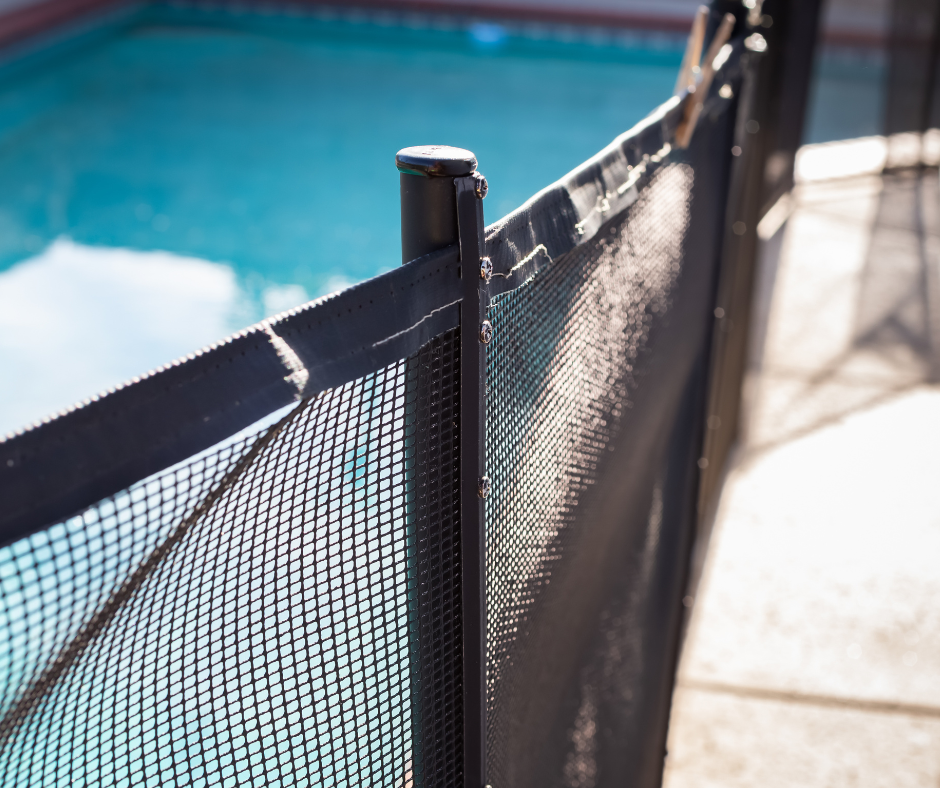
Ensure your pool is inaccessible on all sides by installing fencing or having another type of barrier, such as the side of a building. Any entrance should be child-proof. Use self-latching gates that are difficult for small children to reach, and don’t forget to include items such as door alarms and locks.
Cover the pool when it isn’t in use. The cover is far less enticing to inquisitive little eyes than the water, and it provides another protective barrier to prevent accidental encounters with the water.
Use Pool Alarms
Along with door alarms for any doors in your home or recreation area that lead directly to the pool, surface alarms and gate alarms are vital in protecting against accidents. These alarms can alert you to a potential problem in or around the pool or hot tub and reduce your response time.
Consider Drain Safety
Keep all pool and hot tub drains covered with anti-entrapment covers. Teach children to stay away from the drains and not to experiment with them to see how they work or what they can do.
Use Flotation Devices
Carefully choose the right type of US Coast Guard Certified flotation device for your child’s age and skill level, and make sure their life vest stays on when they are near the water.
Implement Hot Tub Precautions
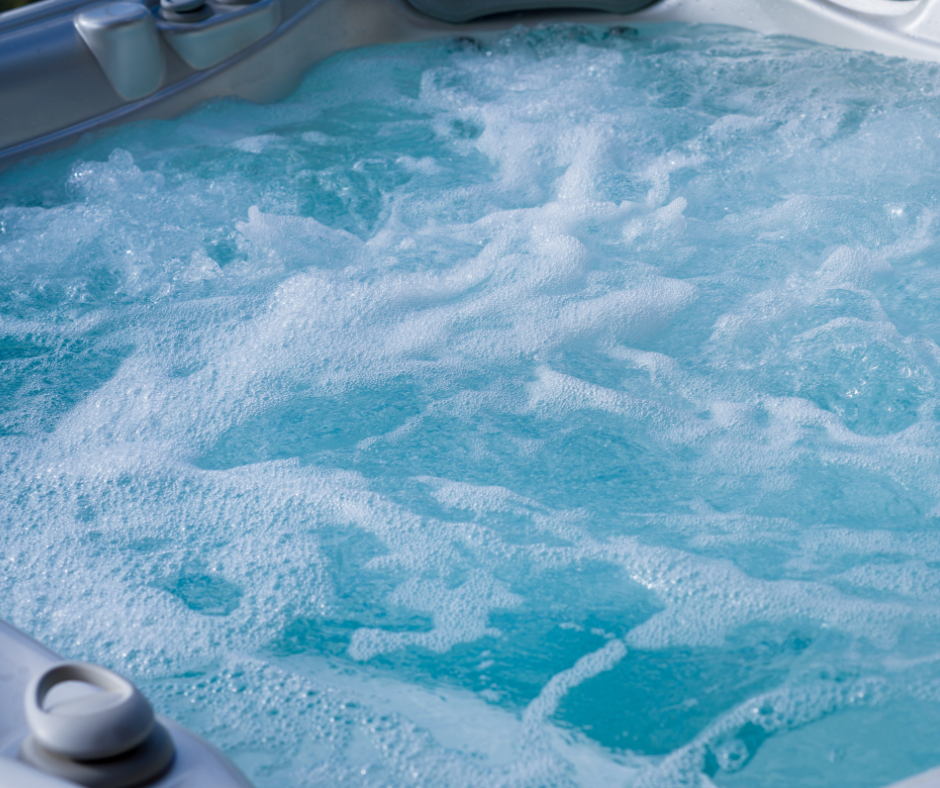
Hot tubs can be tempting for every age, but there are a few extra hot tub safety rules you will need to consider for kids. Remember that hot tubs are unsafe for children under five, even with adult supervision. The risks of overheating and dehydration are greater in younger kids, and you may not even notice the signs of an impending problem creeping in.
If older children may be using the hot tub, take additional precautions to ensure hot tub temperature safety. Keep the water temperature below 100°F to avoid overheating, and watch for signs of dehydration.
Hot tub covers should be properly fitting, secure, and lockable. They should remain in place anytime the hot tub is not in use.
Supervision & Rules
It is important for every child to understand the basics of water safety that apply everywhere and be aware of the rules and expectations for safety at individual pools they may visit.
Designate a Water Watcher
It’s easy to get distracted by everything that goes on in and around a pool. That’s why identifying a designated watcher or “lifeguard” is important in ensuring everyone’s safety.
Take turns with other adults so that no one misses out on the fun, but don’t allow distractions while you are actively watching. That means water watchers should not use cell phones or other electronics.
Stay out of the water and in a position where the entire pool is easily visible. Save conversations, refreshments, and anything else that might divert your attention until someone else has taken over your duties.
Teach & Enforce Pool Rules
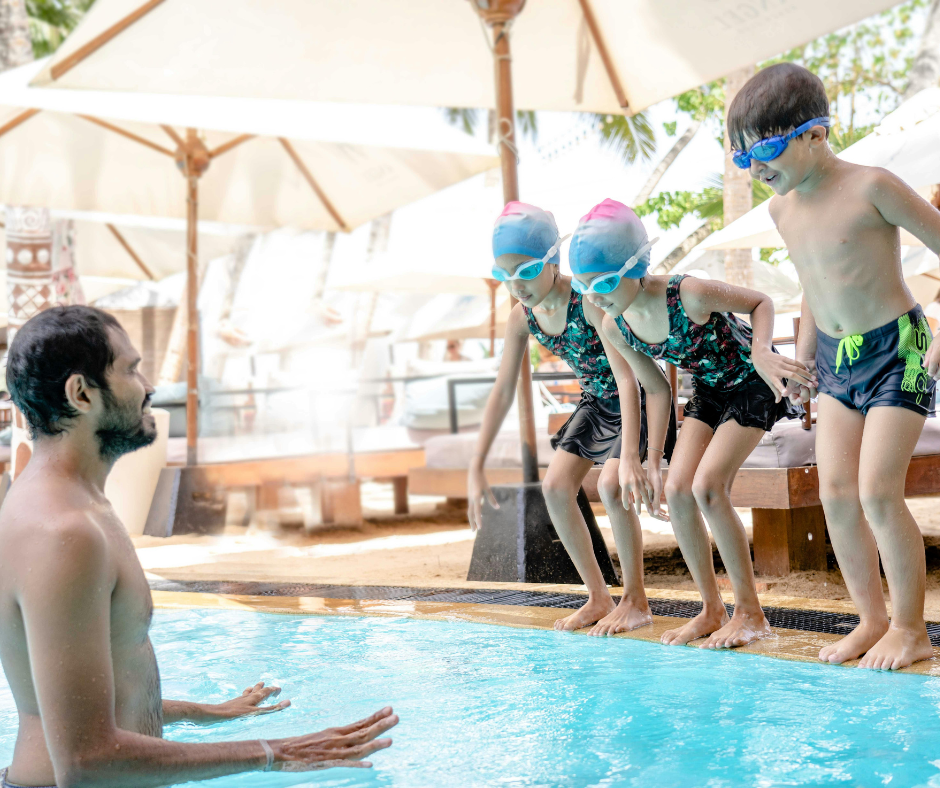
Emphasize that no rough-housing rules apply both in and out of the water. Always use the buddy system. No one should swim alone, even older kids.
Avoid running near the pool, and never push another person in or dunk them in the water. Make sure kids know that they can never dive into shallow areas of the pool.
Additional Hot Tub Safety Tips
Remember that hot tubs are not safe for very young children. Never leave any child unattended in the hot tub. Limit the amount of time older children can spend in the heated water to no more than 10 minutes.
Keep in mind that having the jets and bubbles on while younger children are in the hot tub can throw them off balance or cause uncertainty that could lead to accidents.
Neighbor Pool Awareness
Talk to your children about respecting other people’s properties and living spaces. They should never enter a neighbor’s yard or gated area without that person present and giving their direct permission.
Take the time to have open conversations about accessibility with neighbors who have pools and hot tubs. Review your expectations about supervision during playdates and hot tub use. Ask about the rules your children should be aware of before swimming in their pool.
Ensure that direct communication of permission happens on both sides before allowing a child to attend a playdate that may include pool time. If they are not allowed into the pool area, be sure that is clearly conveyed as well. Whenever possible, be present when your children are in someone else’s pool or hot tub.
Swim Lessons & Emergency Preparedness
Did you know that helping your child understand water safety can begin as early as three months? As children grow, they become more mobile and inquisitive, and it becomes even more critical that they understand important safety rules, including water safety. Starting swim lessons with your infant or toddler early is a great way to build confidence.
Lessons also establish safe practices that can lead kids toward a lifetime love of swimming and the confidence to enjoy the world around them. Teaching basic water safety to any child is a must.
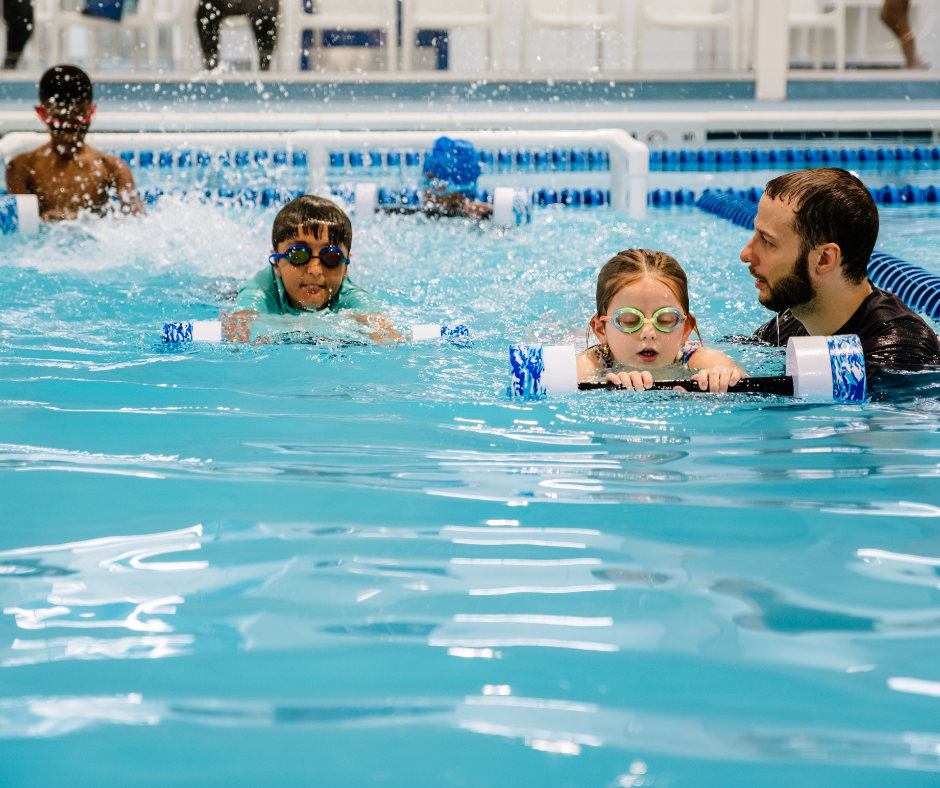
Swim lessons are always a great idea for a number of reasons. Taking lessons is the best way to make sure your child is comfortable and safe when the unexpected happens. Lessons can help children learn how to float and call for help, then progress to additional skills that will help get them to safety.
Keep well-repaired rescue equipment by the swimming area and ensure a phone is nearby at all times in case of an emergency. Take the time to learn infant and child-specific CPR. Learning to help those around you only takes a few hours.
Get Your Free Trial Lesson
Discover the best place for swim lessons near you. Sign your child up for a free trial lesson and come meet our staff at one of Big Blue Swim School’s clean and inviting pools!
Guide to Water Safety for Kids
At Big Blue, we know a parent’s number one concern is keeping their child safe. Sadly, drowning is a leading cause of death among kids ages one through four. The good news is that formal swim lessons can reduce the risk of drowning by 88%, so the best way to lower the risk of drowning among kids is to teach water safety and get them enrolled into swim lessons at a young age.
Big Blue Swim School offers swimming lessons for kids between 3 months and 12 years. Our caring instructors, unrivaled curriculum, and laser focus on progress result in safer swimming for children and reduced worry for parents. This comprehensive guide to water safety for kids introduces the most important tips for all ages.
The Importance of Water Safety for Kids
According to the CDC, 11 drowning deaths take place in the United States every day. Seven to eight kids receive emergency care for nonfatal drowning for every one child who drowns. These nonfatal injuries can result in brain damage, long-term memory issues, and learning disabilities. Teaching kids water safety and continuously discussing and practicing water safety methods can help prevent drowning and other water-related accidents.
Drowning is typically silent and is not highly visible. A struggling swimmer often cannot yell because they are trying to use their respiratory system to breathe. The swimmer’s arms are generally underwater, pushing the body toward the surface. It can be difficult for parents and other adults to recognize that a child is drowning. That’s why both an understanding of water safety is so important for all families.
Read more water safety tips for parents.
Preparing for the Water
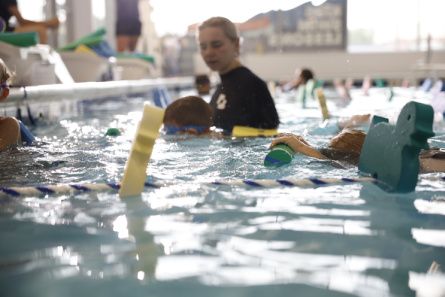
Water safety for kids begins at home, long before heading to a beach or pool. Every family should understand the safety equipment needed and what to do during an emergency. Parents and kids must know the safety measures in place where they plan to swim—such as where to locate a lifeguard or supervisor, potential water hazards, the depth of the pool, and more.
Drowning prevention should involve the whole family. Swim lessons from qualified professionals at Big Blue Swim School prepare kids with the skills and water safety tips they need to play in the pool, ocean, and other bodies of water. Something so helpful that you can do to prepare for being around water is to sign up for lessons in your area.
Pool Safety for Kids
Pools are ideal places to cool down on hot summer days. While some families enjoy the pool in their backyard or visit their neighbor’s pool, others swim in public pools, hotels, or water parks. Consider the following pool safety tips.
Find and Reduce Water Hazards
Every pool should be equipped with the proper barriers to prevent drowning. These barriers must be secure at all times to stop kids from entering. A self-locking gate and working door alarm can keep kids out and alert parents if the pool gate opens. Parents must keep all toys and tools away from the pool or other bodies of water when not in use, as these can draw kids toward the water.
Swim Only in Designated Areas
Kids must understand designated swimming areas before heading to the pool. They need to know the varying depths and where they are not allowed to swim, whether due to pool rules or their own swimming limits. Kids should only swim where and when a lifeguard or water watcher is on duty.
Wear the Correct Safety Gear
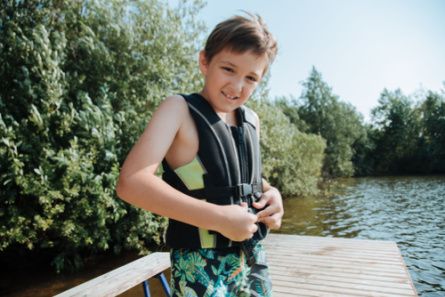
Kids unable to swim independently must wear a life jacket in or around the pool. This life jacket must be approved by the U.S. Coast Guard and appropriate for the child’s size and weight. It should fit snugly when tightened.
Swim With a Buddy
Kids should never swim alone. Kids should swim with a buddy, whether that buddy is a child or an adult.
Actively Supervise
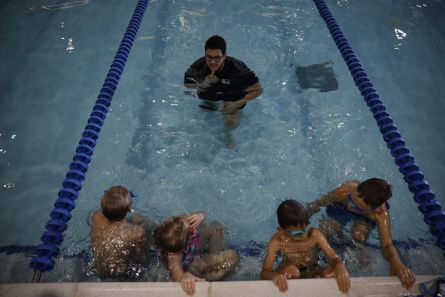
Parents must actively supervise kids when they are in and around the water. Lifeguards constantly scan the pool, but their eyes cannot be everywhere at once. A parent or designated water watcher must keep an eye on kids in the water and should always be within arm’s reach of small kids. The role of the designated water watcher should rotate every 15 to 30 minutes so this person doesn’t become fatigued. The water watcher must keep his or her eyes on the kids in the water without distraction.
To make remembering these things easier, Big Blue uses an acronym: SAFER. You can read all about how to be SAFER here!
Using Flotation Devices Safely
One of the best ways to ensure child safety near water is by using a flotation device, especially for inexperienced swimmers. The safest option is a U.S. Coast Guard-approved life jacket, which provides the best support and keeps a child’s head above water.
While swim vests can provide extra buoyancy in controlled environments, they should never replace active supervision.
Swim floaties, pool noodles, and kickboards are fun but are not designed for safety. They should only be used as swim aids under close supervision.
Water tubes are an enjoyable companion in water, but they must be used with caution—preferably while sitting or lying down. In pools, tubes should only be used where a child can touch the bottom, and an adult should always be nearby.
Locate and Use Rescue Equipment
Parents, teens, and kids must know where rescue equipment is around the pool and how to use it. It’s important to teach kids how to throw rescue equipment to distressed swimmers rather than jumping in to help.
Learn Basic Life-Saving Skills
A study of 289 rescue reports showed a 91% survival rate for drowning victims who received CPR. CPR is a life-saving skill, and experts recommend teaching kids cardiac compression around age 12. Kids and adults who know how to perform CPR can save lives at the pool, the lake, the beach, and everywhere kids are around water.
Teach Kids to Swim
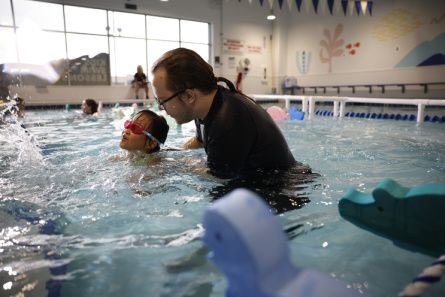
The number one way to prevent drowning and other accidents in the pool is to teach your kids to swim. Big Blue Swim School offers locations in many states, and instructors begin teaching kids as young as 3 months old. The skills learned in a qualified swim school create confident swimmers who are safer in and around water.
Hot Tub Safety for Kids
Child safety near water isn’t just about pools or bodies of water. Hot tub water safety is also important for children. The high temperatures and strong jets can be dangerous, especially for kids under five. Young children can overheat quickly, increasing the risk of dehydration and heat exhaustion. Drowning is also a concern—kids can slip under the water in seconds, and the bubbles from the jets may prevent them from being seen.
To keep children safe, always supervise them closely and limit their time in the hot tub to five to ten minutes. The water temperature for kids should never be above 100°F (38°C), and children should stay seated to avoid slipping. It’s best to keep infants and toddlers out of hot tubs entirely. When not in use, secure the cover to prevent unsupervised access.
Ocean, Lake, and River Water Safety Tips
Many of the same swimming safety precautions applied at the pool are also helpful in an ocean, lake, river, and other bodies of water. However, safety experts suggest implementing several additional safety measures.
Safety While Boating
Kids of all ages should wear a life jacket while boating. The life jacket must be Coast Guard-approved, fit properly, and be appropriate for the child’s weight and size.
Beyond life jackets, children should always be supervised and taught basic boating rules and safety, such as staying seated while the boat is moving and keeping hands and feet inside. Having a safety plan is also important, including knowing where emergency equipment like throw rings and first aid kits are stored.
Be Aware of Boundaries
Many natural bodies of water have designated swimming areas. Parents need to familiarize kids with the boundaries and potential hidden obstacles (such as rocks or sunken structures) under the water’s surface. Instruct kids to swim in front of lifeguard stands whenever possible. Parents and lifeguards have the same goal of protecting kids, so kids must always listen to lifeguard rules and instructions.
Understanding Rip Currents
Rip currents are narrow, powerful channels of moving water in the ocean and other large bodies of water, such as the Great Lakes. Rip currents can move faster than an Olympic swimmer and put people at risk of drowning due to fatigue.
Kids must know the dangers of rip currents and how to escape them. Understanding the importance of swimming parallel to the shore to escape a rip current and then swimming at an angle back to shore can be helpful.
Check out our water safety survival tips for parents and kids for these specific locations:
- Ocean safety
- Beach safety
- River safety
- Lake safety
Infant and Toddler Bath Safety
Bathtime can be a fun bonding experience, but it’s also one of the riskiest times for young children. For babies under one, three-quarters of all drownings occur in bathtubs. Because infants and toddlers lack the strength to lift themselves out of water, even an inch or two can be dangerous.
To keep bath time safe, always stay within arm’s reach of your child—never leave them unattended, even for a moment. Gather all bath essentials beforehand to avoid having to step away. Use a non-slip mat in the tub to prevent slipping, and keep the water temperature around 100°F (38°C) to avoid burns.
Fill the tub with only a few inches of water for infants, and as your child grows, teach them to sit rather than stand in the tub. Make sure to always drain the tub immediately after use.
Water Safety for Special Needs Children
Sadly, eople with autism are nearly forty times more likely to die from drowning than the general population. This statistic highlights the importance of water safety education for children with special needs, including those with autism, sensory issues, or mobility challenges.
To reduce the risks, consider adaptive swimming lessons tailored to your child’s abilities. These sessions often focus on water familiarity, floating techniques, and safe exits. Big Blue Swim School offers one-on-one lessons, and select Big Blue locations now offer adaptive swim lessons for children of all abilities, including those with physical, cognitive, and sensory needs. We would love to have a conversation about your child’s specific needs. Please call the Big Blue in your community to learn more.
Another way to keep your special needs child safe is through secure barriers, such as pool fences and door alarms, to provide an extra layer of protection at home. Teaching water rules with your child’s specific needs in mind—like always swimming with supervision or wearing a life jacket around water—can reinforce safe habits.
Partner with Professionals to Teach Water Safety to Kids
Parents should communicate with kids often about water safety precautions. However, qualified professionals are most suited to teach water safety. It is impossible to ensure a child will always be safe in and around water. That said, proper instruction can make kids of all ages “water safer.”
Because formal swim lessons reduce a child’s chance of drowning by 88%, the best thing you can do for water safety is to enroll your kids in year-round swim lessons taught by experts in a professional setting is the best way to prepare a child to be safe around water.
Register your child for swim lessons at your local Big Blue Swim School today!